Update2026.09.22 화

INTRINSIC VALUE : Warren E. Buffet. Intrinsic Value. An Owner's Manual, 1996.
Now let's focus on a term that I mentioned earlier and that you will encounter in future annual reports.
Intrinsic value is an all-important concept that offers the only logical approach to evaluating the relative attractiveness of investments and businesses. Intrinsic value can be defined simply: It is the discounted value of the cash that can be taken out of a business during its remaining life.
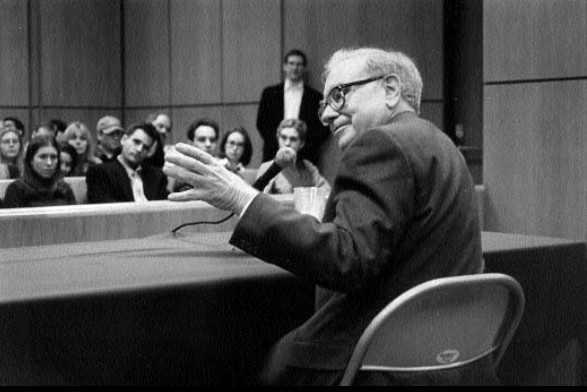
The calculation of intrinsic value, though, is not so simple. As our definition suggests, intrinsic value is an estimate rather than a precise figure, and it is additionally an estimate that must be changed if interest rates move or forecasts of future cash flows are revised. Two people looking at the same set of facts, moreover ? and this would apply even to Charlie and me ? will almost inevitably come up with at least slightly different intrinsic value figures. That is one reason we never give you our estimates of intrinsic value. What our annual reports do supply, though, are the facts that we ourselves use to calculate this value.
Meanwhile, we regularly report our per-share book value, an easily calculable number, though one of limited use. The limitations do not arise from our holdings of marketable securities, which are carried on our books at their current prices. Rather the inadequacies of book value have to do with the companies we control, whose values as stated on our books may be far different from their intrinsic values.
The disparity can go in either direction. For example, in 1964 we could state with certitude that Berkshire's per-share book value was $19.46. However, that figure considerably overstated the company's intrinsic value, since all of the company's resources were tied up in a sub-profitable textile business. Our textile assets had neither going-concern nor liquidation values equal to their carrying values. Today, however, Berkshire's situation is reversed: Now, our book value far understates Berkshire's intrinsic value, a point true because many of the businesses we control are worth much more than their carrying value.
Inadequate though they are in telling the story, we give you Berkshire's book-value figures because they today serve as a rough, albeit significantly understated, tracking measure for Berkshire's intrinsic value. In other words, the percentage change in book value in any given year is likely to be reasonably close to that year's change in intrinsic value.
You can gain some insight into the differences between book value and intrinsic value by looking at one form of investment, a college education. Think of the education's cost as its "book value." If this cost is to be accurate, it should include the earnings that were foregone by the student because he chose college rather than a job.
For this exercise, we will ignore the important non-economic benefits of an education and focus strictly on its economic value. First, we must estimate the earnings that the graduate will receive over his lifetime and subtract from that figure an estimate of what he would have earned had he lacked his education. That gives us an excess earnings figure, which must then be discounted, at an appropriate interest rate, back to graduation day. The dollar result equals the intrinsic economic value of the education.
Some graduates will find that the book value of their education exceeds its intrinsic value, which means that whoever paid for the education didn't get his money's worth. In other cases, the intrinsic value of an education will far exceed its book value, a result that proves capital was wisely deployed. In all cases, what is clear is that book value is meaningless as an indicator of intrinsic value.
※출처를 밝히면 자유롭게 인용 가능합니다.